

8 Architects Who Gave Their Names to Architectural Styles 09 Jul
Throughout history, architects with distinctive ideas and innovative styles have influenced later generations. Some proposed ideas so original that new words were needed to describe their work. Their styles could define an era or capture the imagination of people decades later. Today, a building can still be recognised as Gaudiesque or Corbusian. Here are eight terms derived from the names of influential architects.

Miesian
Ludwig Mies van der Rohe is known for the sayings “Less is more” and “God is in the details.” They capture the precise minimalism of Miesian architecture. Steel frames, glass walls and an appreciation of simplicity have influenced everything from modern skyscrapers to elegantly understated kitchens.

Richardsonian Romanesque
Henry Hobson Richardson created an eclectic blend of French, Spanish and Italian Romanesque architecture. Round arches over doors and windows and cylindrical towers with conical roofs lend it a distinctive character. Heavy masonry gives a sense of permanence. Its sculpted forms influenced the Chicago School and Scandinavian architects.
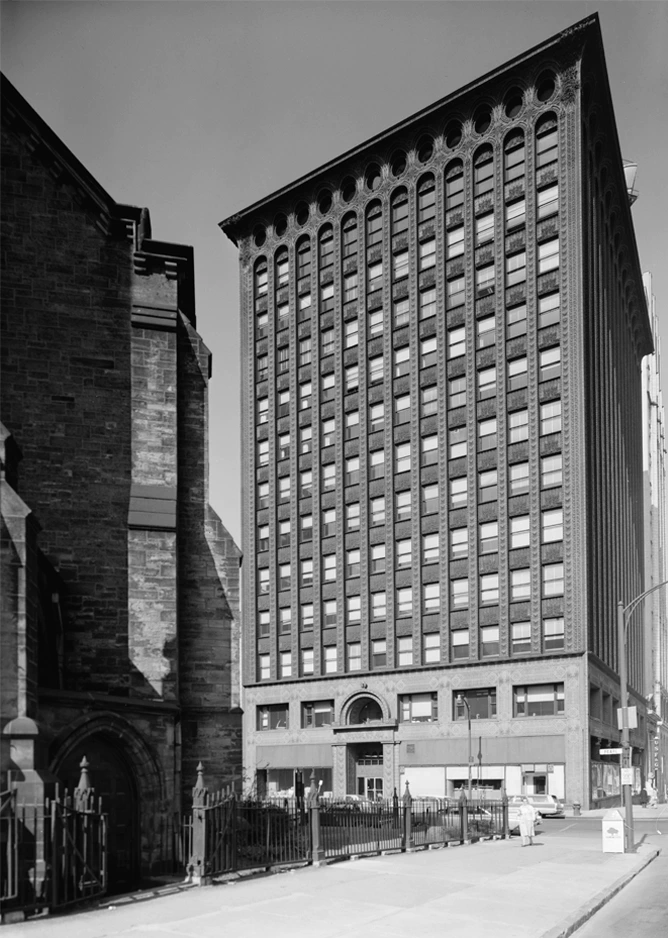
Sullivanesque
Louis Sullivan balanced rectilinear forms with intricate ornament. As new technology made taller buildings possible, he reworked the horizontal emphasis of Beaux-Arts design into vertical compositions. He wanted a tall building to rise proudly and express its height from top to bottom. The Midland Terra Cotta Company and its competitors helped proliferate the Sullivanesque style, visible in many buildings along Chicago streets.

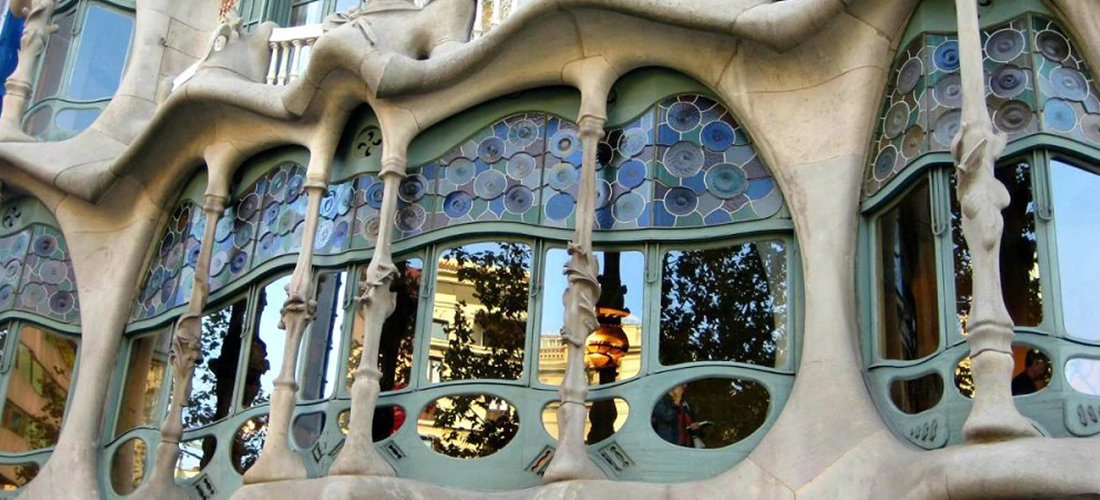
Gaudiesque
Antoni Gaudí’s work has fantastical forms and unexpected proportions that seem to belong to another world. He combined complex geometry with elaborate ornament inspired by nature to create sculptural buildings that excite the imagination.

Palladian
Renaissance architect Andrea Palladio drew on ancient Roman architecture and classical antiquity. In the eighteenth century the style spread in England, elsewhere in Europe and in North America. Classical columns and pediments contribute to symmetry and balance. Mathematical proportions, rule-based composition and restrained ornament distinguish Palladian work from other Renaissance designs.

Corbusian
Le Corbusier’s style is harder to pin down than the more consistent approaches of Gaudí or Mies. Over his career it moved from smooth, pure forms towards sculptural forms in exposed concrete associated with Brutalism. Pilotis, a free plan and a free façade draw on his Five Points of a New Architecture. Raw, openly expressed materials are another characteristic.

Ruskinian
John Ruskin influenced generations of writers, architects and economists. In The Seven Lamps of Architecture he argued for the importance of structure, ornament, honest material use and an open expression of how a building is made. Ruskinian architecture is often associated with Gothic forms, decorative brickwork and polychromy.

Barraganesque
Luis Barragán used clean lines, simple forms and bright bursts of colour to make spaces that feel playful, intimate, spiritual and poetic. He sought an emotional architecture, guided by feeling more than rational analysis. Cubes and planes, saturated colours and dramatic light characterise his work.
No Comments