

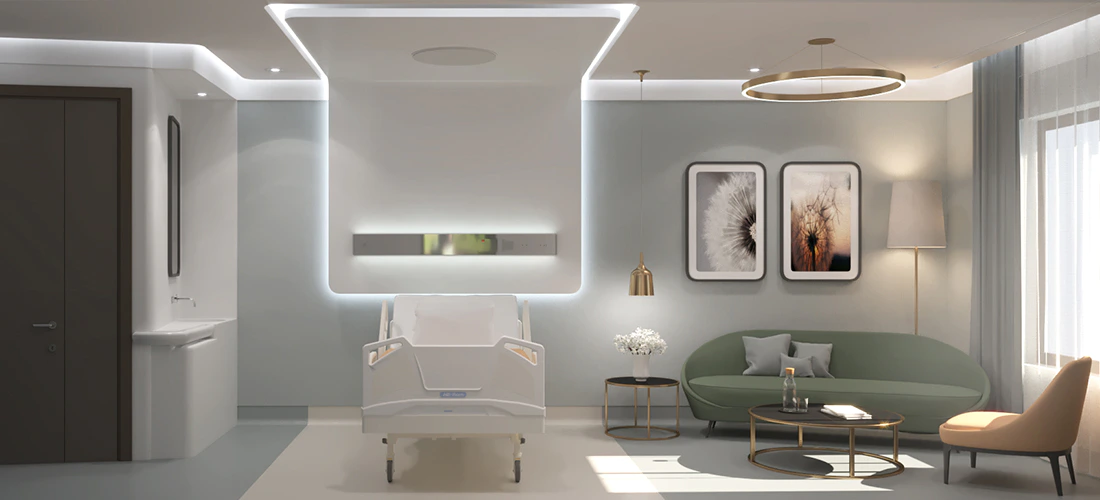
Patient Room Design for a Better Hospital Experience 14 Feb
A well-designed patient room balances clinical function with emotional well-being.
Healthcare spaces must support effective medical care while meeting the emotional needs of patients and staff. Because patients spend much of their time in their rooms, design decisions there carry particular weight. Patients come to hospital when they need care they cannot receive at home. A room that feels familiar and welcoming can improve their experience while staff deliver the care they need.
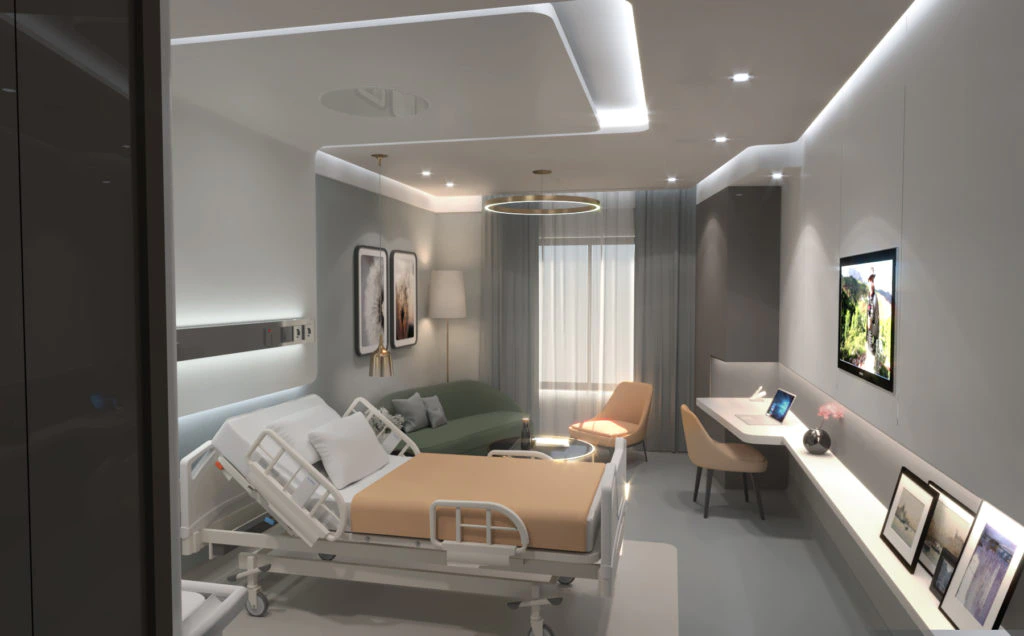
Design the area around the bed for care
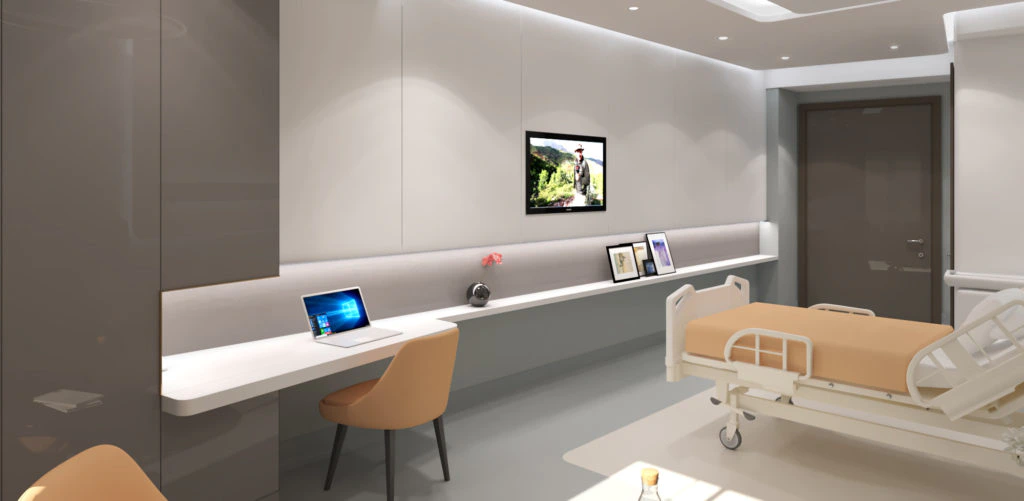
The bed and its surroundings are the centre of patient care. Staff need space to work, a nearby sink, room for additional equipment and controls within reach. A visible piece of equipment can reassure patients by reminding them that expert care and the tools to provide it are close at hand. In the Kent Hospital project, designed by Yağmur Proje in collaboration with Arter Yapı, the ceiling-connected headboard integrates lighting and controls, while a clear area around the bed accommodates care.
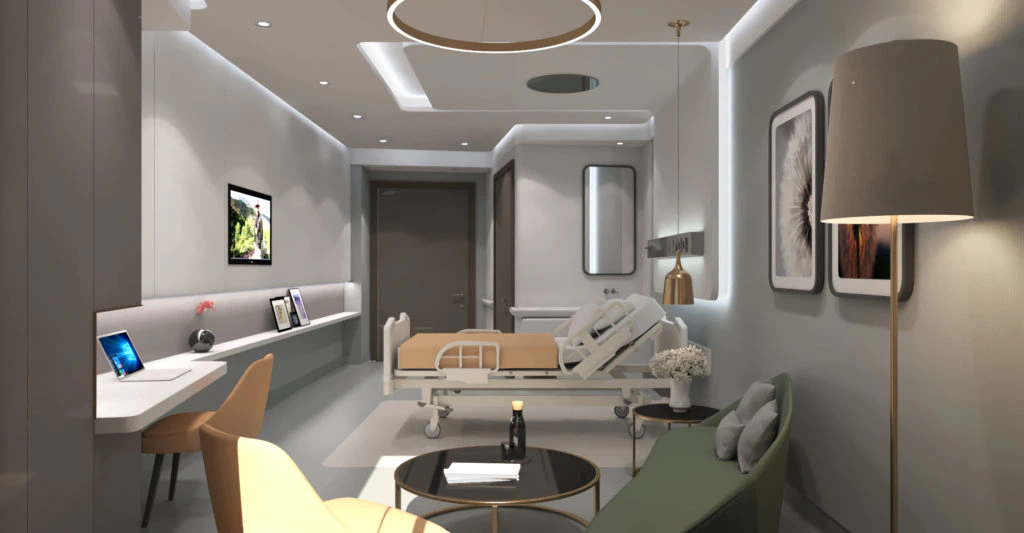
Give patients some control over the room
A ward cannot be designed separately for every patient. Thoughtful details can ease the emotional strain of a hospital stay. Some hospitals let patients choose the colour of LED wall lighting or select the artwork they want to see. The lighting used in Kent Hospital is well suited to colour adjustment. Whether a stay lasts two days or two months, choices like these help patients make the room their own.
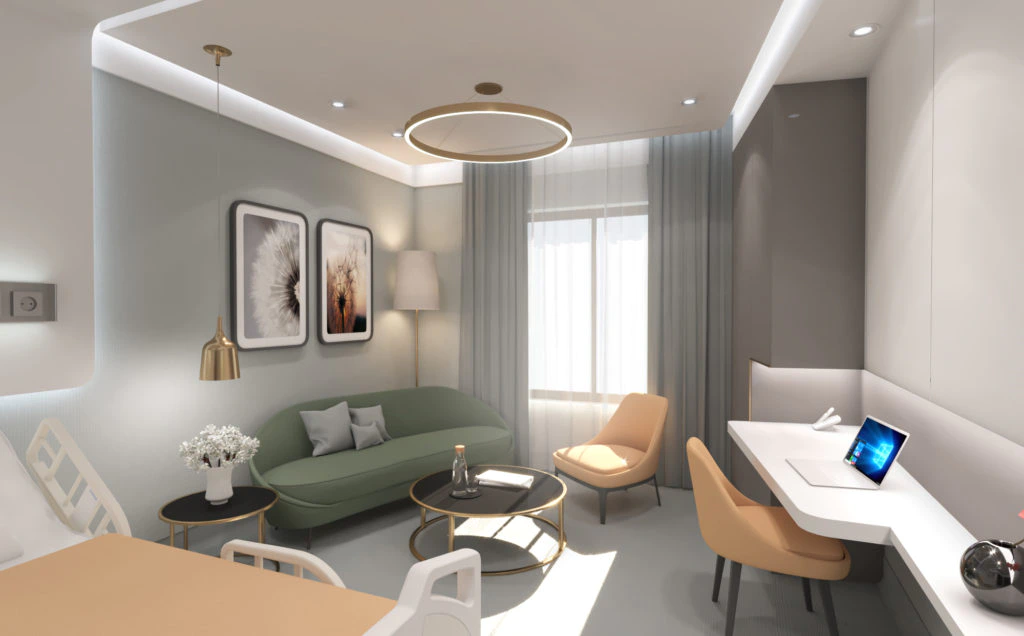
Make room for family and caregivers
Patients, relatives, caregivers and hospital staff work together in the room. A distant armchair or a pair of uncomfortable chairs can give way to seating closer to the bed, sleeper sofas, a desk and familiar decorative details. A small sitting area supports better communication. At Kent Hospital, comfortable furniture and a practical table opposite the bed make the room more welcoming for patients and those who accompany them.
Support patients through a difficult time
Safety and ease of care come first. Comfort for the patient and family belongs in the same brief. Design can help people cope with a difficult stay. Patient-centred hospitals around the world increasingly provide clinical care in safe, welcoming spaces.
No Comments